

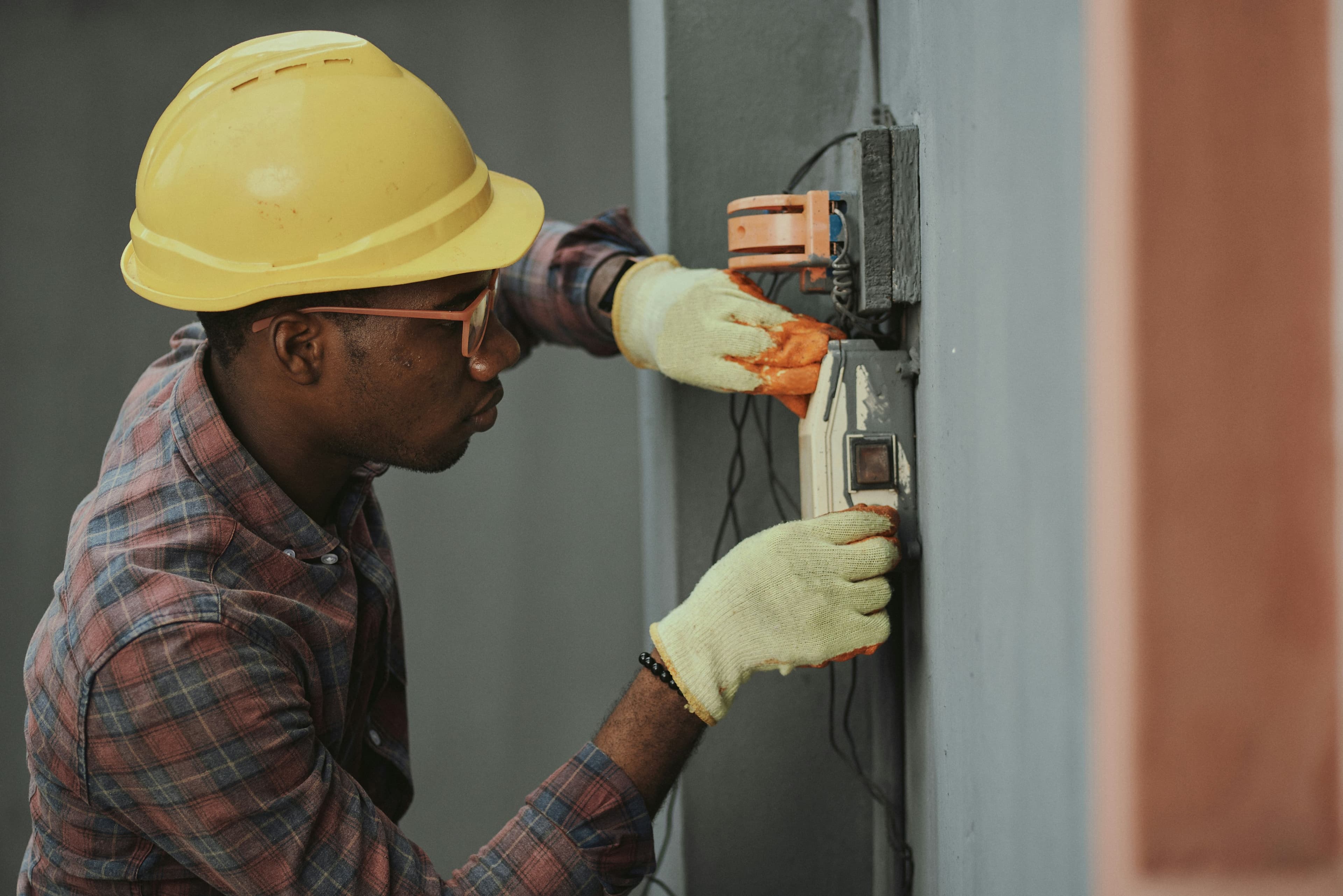
Pakistan is one of the largest trades corridors in the world, and Spanish construction is short of skilled labour. The match looks obvious, but the legal path has details almost no online content gets right, starting with a distinction that changes the entire process.
The distinction nobody explains: what is regulated and what is not
This is the point that determines what you need to evidence before leaving Pakistan.
Plumbing is not a regulated profession in Spain in general terms. Changing a tap, repairing a cold-water pipe or clearing a drain requires no official qualification. Anyone can do it legally.
But authorised installer status is required for a specific set of work:
- Installing and maintaining drinking water pipework
- Domestic hot water in public and collective buildings
- Water recycling and treatment networks
- Installations in hospitals, care homes, schools, nurseries, laboratories and collective canteens
In short: standalone domestic work is open, and construction and collective building work is gated. That difference determines whether you need formal accreditation or whether demonstrable experience is enough.
For electrical work the framework is stricter. Executing and signing off low-voltage installations requires authorised company or installer status, granted by each autonomous region's industry department. That said, in normal practice the installation company holds the authorisation, so working as a hired tradesperson for an already-authorised company does not require you to hold it individually. Confirm this with the autonomous region.
Always confirm with the industry department of the specific autonomous region. This is a regional competence and both requirements and accreditation calls vary between regions.
The legal routes in
Hiring at origin and the shortage list
The main route. A Spanish employer hires you while you are in Pakistan, and that offer supports the residence and work authorisation.
The occupation normally has to appear on the Shortage Occupation List. The first-quarter 2026 list was approved by Resolution of 28 January 2026, published in the official gazette on 2 March, and includes electrical installers.
Two critical things about the list:
- 1It is provincial.
There are 52 independent lists. An occupation can be on one province's list and not the neighbouring one.
- 2It changes quarterly.
What holds in Q1 may not hold in Q2.
GECCO
Collective hiring at origin is governed for 2026 by Order ISM/1547/2025 of 23 December, in force from 1 January to 31 December 2026. It covers stable and circular hiring, in generic or named form. Pakistan has history in this mechanism.
Socio-educational arraigo
If you already reside in Spain, Royal Decree 1155/2024 changed the rules from 20 May 2025. It cut the continuous residence required for most arraigo routes from three years to two, and allows work of up to 30 hours a week during training. For trades this fits well: you can take an electrical or plumbing certificate of professionalism and work at the same time.
Check in minutes whether you can practice in your destination country.
The process, stage by stage
Stage 1 — Verifying your certificates
First, confirm your trade certificates appear in the issuing institution's register. The Verifier Agent contacts the centre directly and returns documented confirmation, typically in 5 to 15 days.
In trades corridors this matters especially, because document fraud is common and a Spanish employer who has already been handed one forged certificate treats the next one with suspicion.
Stage 2 — Legalisation and translation
This is where Pakistan adds time relative to other corridors. The usual chain runs through the Pakistani foreign ministry and the Spanish consulate, rather than resolving with a single apostille.
Documents are then translated, with a sworn translation by a translator authorised by the Spanish Ministry of Foreign Affairs.
Typical timeline: four to eight weeks.
Stage 3 — Residence and work authorisation
Filed by the employer with the provincial immigration office. One to three months.
Stage 4 — Visa at the consulate
At the Spanish consulate in Islamabad. Three to eight weeks.
Realistic timelines
Adding it up, five to nine months from offer to arrival. That is longer than the Philippine or Latin American corridors, and almost all of the difference sits in legalisation.
Evidencing experience without a qualification
If you have years of practice but no formal qualification, there is a procedure that accredits professional competence acquired through work experience. It converts documented experience into official accreditation. It is called by autonomous region and by occupational family, so it depends on an open call existing for yours.
Warning signs
The trades corridor into Europe has problematic intermediaries. Watch for:
- Being charged for the job offer. The employer pays for hiring, not you.
- Offers with no company name. If you cannot verify who is hiring, there is no offer.
- Promises of a "guaranteed visa". Nobody can guarantee an administrative decision.
- Requests to hold your passport. Illegal in Spain, without exception.
Where Booka fits
Booka does not process visas and does not replace an immigration lawyer. We do the verification layer: confirming with the issuing institution that your trade certificates are genuine and leaving documented proof, which is exactly what a Spanish employer needs in order to hire with confidence. The outcome of any immigration procedure always depends on the receiving country.


